Quick Answer
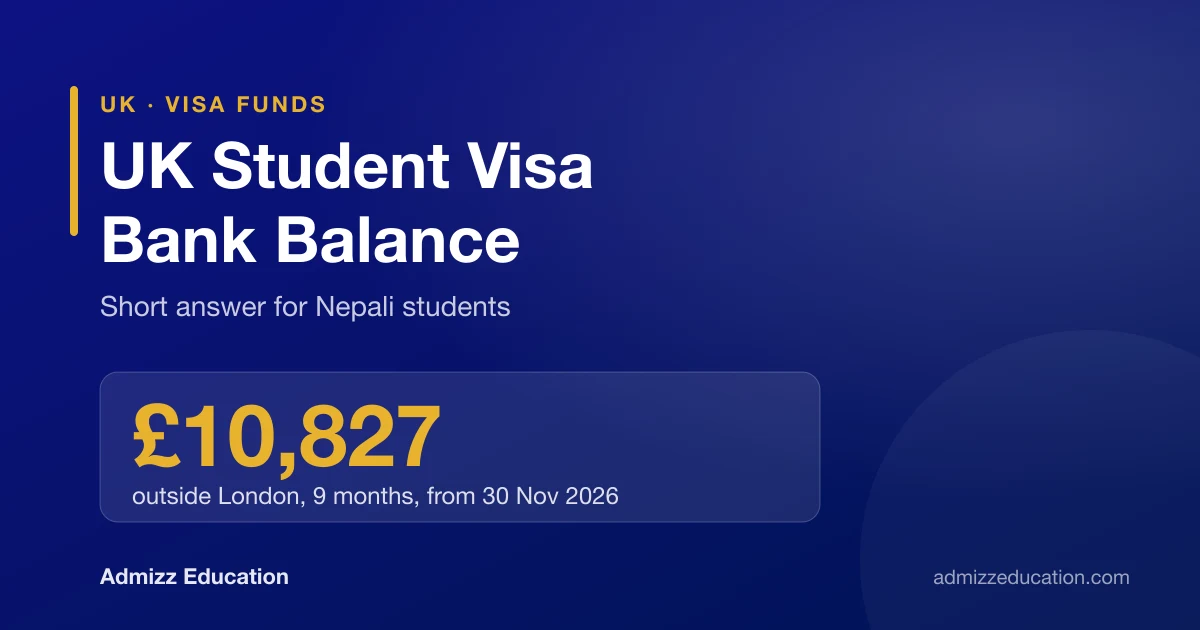
You must show living-cost funds for up to 9 months. For applications before 30 November 2026 that is £1,171 a month outside London (£10,539) or £1,529 in London (£13,761). From 30 November 2026 it rises to £1,203 a month outside London (£10,827) or £1,570 in London (£14,130). You also show the unpaid part of your first-year tuition, held for 28 days in a row, ending within 31 days of the date you apply.
The details
- Before 30 November 2026, outside London: £1,171 × 9 months = £10,539
- Before 30 November 2026, in London: £1,529 × 9 months = £13,761
- From 30 November 2026, outside London: £1,203 × 9 months = £10,827
- From 30 November 2026, in London: £1,570 × 9 months = £14,130
- Which rate applies: it depends on the date you apply, not on the date of your CAS, course or bank statement. Most applicants for September 2027 will apply after 30 November 2026.
- Plus your unpaid first-year tuition. A deposit you have already paid is deducted.
- 28 days: keep the balance at or above the amount for every day of the period.
Read the full guides on the bank balance and the 28-day rule, or the full cost breakdown.
Sources
- GOV.UK: Student visa, money you need
- OTS Solicitors: student visa maintenance funds increase from 30 November 2026
Checked in October 2026. Rules change, so confirm on the official site when you apply. For help with your own application, talk to our counselling team.
Frequently Asked Questions
Does the money have to stay in the account after I get my visa?
The 28-day rule applies to the evidence you submit with your application. You will still need money to live on, so keep your funds available for your first months.
Can a parent's account be used for the funds?
Yes, the money can be held by a parent or legal guardian if you provide their consent and proof of your relationship. It must still be held for 28 days in a row. See our 28-day rule guide for the details.
Talk to Counselor Today