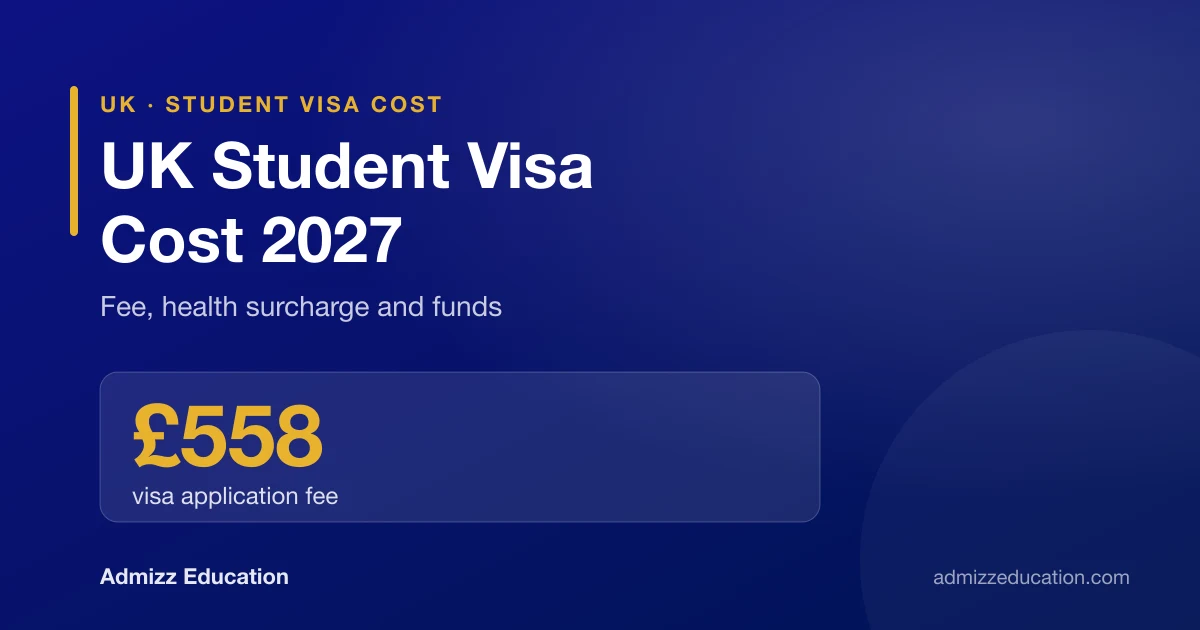
Visa application fee
£558
Health surcharge (students)
£776 per year
Funds outside London
£1,203 a month from 30 Nov 2026 (£1,171 before)
Funds in London
£1,570 a month from 30 Nov 2026 (£1,529 before)
Quick Answer
A UK Student visa applied for from outside the UK costs £558. You also pay the Immigration Health Surcharge of £776 per year of visa (£1,164 for a visa of 18 months or less), and you must show living-cost funds for up to 9 months: £1,171 a month outside London or £1,529 in London before 30 November 2026, and £1,203 or £1,570 for applications from that date. On top of the funds, you need to show your unpaid first-year tuition. The funds are held in your account, not spent on the visa.
The three costs of a UK student visa
Three separate amounts make up the cost of a UK Student visa, and only two of them are fees you pay away.
- The visa application fee: £558 to apply for a Student visa from outside the UK, according to GOV.UK.
- The Immigration Health Surcharge (IHS): £776 per year for students, paid as part of your application, according to GOV.UK.
- Proof of funds: money you must hold, not spend. It covers your living costs and unpaid tuition.
How the health surcharge is calculated
The IHS depends on how long your visa lasts, and you pay it all at once when you apply. For a visa of more than six months but under 12 months, you pay the cost of a full year. For a visa of 18 months or less, you pay the yearly cost plus half the yearly cost.
That means a one-year Master's with a visa of 18 months or less pays £1,164 (£776 plus £388). A longer course pays by the length of the visa granted, so check the visa length on your confirmation of acceptance. You do not pay the IHS again each year.
How much money you must show
The living-cost funds you must hold depend on when you apply, for up to 9 months:
- Applications before 30 November 2026: £1,171 a month outside London (£10,539) or £1,529 in London (£13,761), according to GOV.UK.
- Applications from 30 November 2026: £1,203 a month outside London (£10,827) or £1,570 in London (£14,130).
The application date, not the date of your CAS or bank statement, decides which rate applies. Most applicants for September 2027 will apply after 30 November 2026, so plan for the higher amounts.
You must hold this money for at least 28 days in a row, and the end date of the 28-day period must be within 31 days of the date you apply for your visa, according to GOV.UK.
On top of that, you need to show the unpaid part of your first-year tuition. Any deposit you have already paid to your university, for example to get your CAS, is deducted from what you must show. Read our guides on the bank balance you need and the 28-day rule.
A simple example (illustration only)
Say you study outside London and your unpaid first-year tuition is £10,000 after your deposit. The funds you must show are:
- Living costs: £10,539 before 30 November 2026, or £10,827 from that date
- Unpaid tuition: £10,000
- Total to show: £20,539 before 30 November 2026, or £20,827 from that date
Your visa application fee (£558) and health surcharge (£1,164 for a visa of 18 months or less) are paid separately, so the cash you spend on the application itself is £1,722. These numbers are an example, not a quote. Your own tuition will be different.
Other costs to plan for
- Tuberculosis test: applicants from Nepal usually need one before applying. Confirm on GOV.UK whether it applies to you.
- English test: if you need an approved English test, include the test fee.
- Document and bank costs: certified copies, bank letters and transfer charges.
- Education tax on tuition: Nepal charges a tax on foreign-exchange payments for education. See our full cost guide for the full breakdown.
If you are bringing family, the rules are different. Read our guide to dependants on a UK student visa.
Check before you apply
Visa fees, the health surcharge and the funds amounts are set by the UK Government and can change. Always check the current figures on GOV.UK on the day you apply. For the whole process, see our UK student visa guide for Nepalese students and our scholarship options.
Sources
- GOV.UK: Student visa, how much it costs
- GOV.UK: Student visa, money you need
- OTS Solicitors: student visa maintenance funds increase from 30 November 2026
- GOV.UK: Immigration Health Surcharge, how much you pay
Figures checked against these pages in October 2026. The rise comes from the Home Office Statement of Changes to the Immigration Rules dated 3 September 2026, as summarised by OTS Solicitors: student visa maintenance funds increase from 30 November 2026. We could not open the official statement itself, so check GOV.UK when you apply.
Frequently Asked Questions
How much does a UK student visa cost from Nepal?
The application fee is £558 when you apply from outside the UK. You also pay the Immigration Health Surcharge of £776 per year of visa, and you must show living-cost funds and unpaid tuition.
How much is the health surcharge for a one-year UK Masters?
For a visa of 18 months or less, you pay the yearly cost plus half, which is £1,164 at the student rate of £776 per year.
How much bank balance do I need for a UK student visa?
For applications from 30 November 2026 you need £1,203 a month outside London or £1,570 in London for up to 9 months (£1,171 and £1,529 before that date), plus your unpaid first-year tuition. You must hold the money for 28 days in a row.
Is the bank balance part of the visa cost?
No. The funds are money you must hold to show you can support yourself. They are not paid to the Home Office.
Talk to Counselor Today