
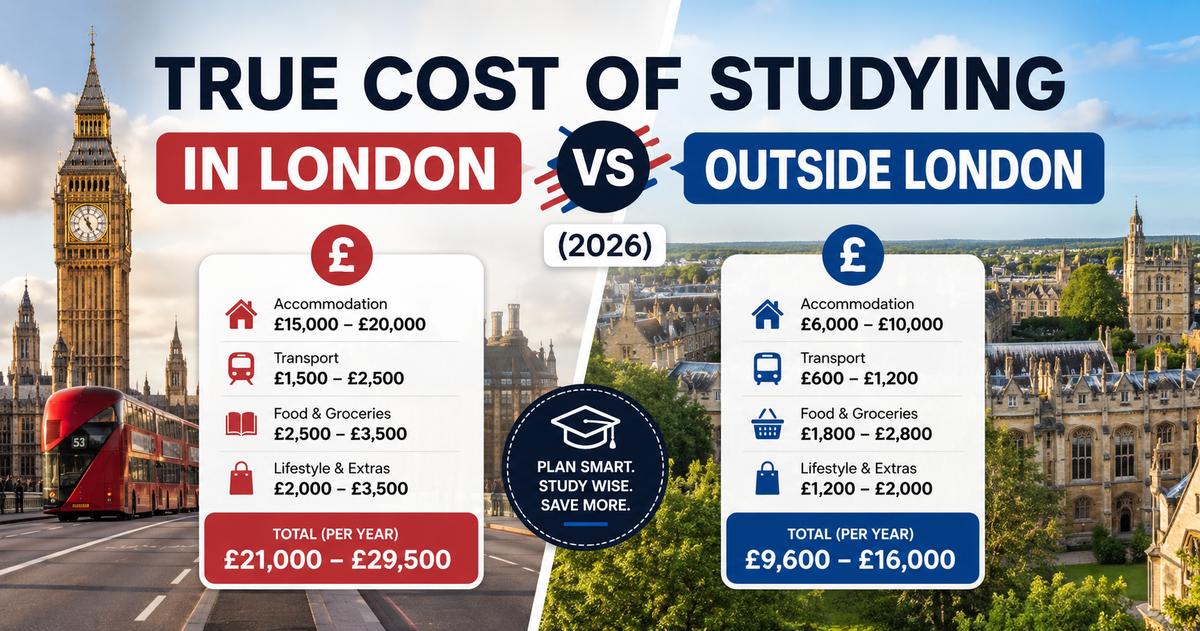
London or Outside London — The Choice That Changes Everything
The single most important financial decision you will make as an international student in the UK is not which university or course to choose. It is which city to live in. London and non-London cities offer comparable academic quality at dramatically different costs. Over a three-year degree, studying outside London can save you £15,000–£25,000 in living expenses alone — money that could fund your visa extension, support your family, or build your savings while you job-hunt after graduation.
Monthly Budget: London vs Outside London
| Expense | 🏙️ London | 🏘️ Outside London (e.g. Manchester, Leeds) |
|---|---|---|
| Accommodation (shared room) | £800 – £1,200 | £450 – £700 |
| Groceries & food | £200 – £300 | £150 – £250 |
| Transport | £100 – £200 (Oyster) | £50 – £80 (bus pass) |
| Utilities & internet | £80 – £120 | £60 – £100 |
| Personal & leisure | £100 – £200 | £80 – £150 |
| Total / Month | £1,334 – £1,600+ | £900 – £1,200 |
Accommodation Options and What They Cost
- University halls of residence (Year 1 — strongly recommended): Most UK universities guarantee first-year accommodation for international students. Bills and internet are usually included. London halls: £800–£1,000/month. Outside London: £400–£650/month. Zero hassle, safe, and immediately social.
- Shared private flat (Year 2+): Sharing a 3–4 bedroom flat is the most common arrangement for continuing students. London: £700–£1,000/month per room. Manchester / Leeds / Birmingham: £450–£700/month. Bills are usually separate — budget an extra £80–£120/month.
- Private studio / purpose-built student accommodation: Providers like Unite Students or iQ offer private rooms with shared kitchens. Fully managed and bills-included, but more expensive. London: £1,000–£1,500/month. Outside London: £600–£900/month.
- Living in outer zones and commuting (London only): Zones 3–5 rent is 30–40% cheaper than central London. Transport costs increase, but the net saving is significant for students on a tight budget.
Tuition Fee Payment After Enrolment
UK universities require a £4,000 deposit before issuing your CAS (Confirmation of Acceptance for Studies), which you need to apply for your student visa. This deposit is deducted from your total tuition fee. The remaining balance is typically paid in one of three ways:
- Full upfront payment at enrolment: Pay the remaining balance in one payment at the start of the academic year. Some universities offer a small early payment discount of 1–3%.
- Termly instalments: Split the remaining balance across 3 payments aligned with each term (September, January, April). The most common arrangement for international students.
- Sponsored payment: If your fees are covered by a government, employer, or scholarship sponsor, your sponsor submits a confirmation letter to the university. You must bring the original letter at enrolment.
Transport Discounts and Part-Time Work
Transport savings: In London, a Student Oyster card gives a 30% discount on Travelcards and Bus & Tram passes. The 16–25 Railcard (£30/year) gives one third off most UK rail journeys. Outside London, most cities offer student bus passes for £50–£80/month for unlimited local travel.
Part-time work earnings: International students on a Student Visa can work 20 hours per week during term time and full-time during official university vacation periods. At the UK National Living Wage of £12.21/hour (2026), working 20 hours per week generates approximately £880–£950 gross per month — enough to cover a significant portion of living costs, particularly outside London.
Frequently Asked Questions
Talk to Counselor Today