What Is the Chevening Scholarship?
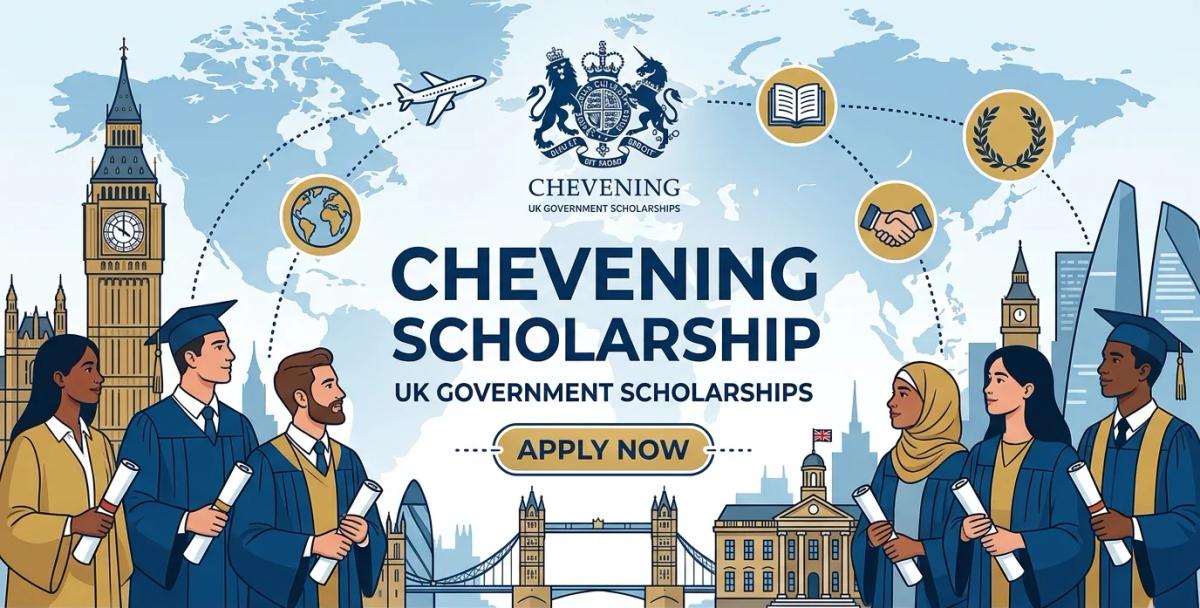
The Chevening Scholarship is the UK Government's flagship international scholarship program, funded and managed by the Foreign, Commonwealth and Development Office (FCDO) in partnership with public and private sector organizations. Since its launch in 1983, Chevening has supported over 50,000 scholars from more than 160 countries, including many outstanding graduates from Nepal.
In simple terms, Chevening is a fully funded one-year Master's scholarship at a UK university of your choice. It is also a chance to join a global network of future leaders, build relationships with policymakers and professionals, and develop the skills to create positive change back in Nepal.
Chevening looks for people with leadership potential, networking ability, and a clear plan to contribute to Nepal's development after their studies. If you can communicate that vision compellingly, you stand a strong chance of being selected.
Why Nepali Students Should Apply
Nepal has a long history of producing Chevening Scholars, and the UK and Nepal share strong educational and diplomatic ties. Nepal is an eligible country for Chevening, and the British Embassy in Kathmandu promotes the program and holds information sessions. Here is why Nepali professionals should consider applying:
- Zero financial burden: Chevening is fully funded, so you can pursue a UK Master's without worrying about tuition fees or living costs.
- Global alumni network: You join a 50,000+ strong network of Chevening Alumni, many in senior positions in government, business, and academia.
- Career transformation: Chevening is widely recognized in Nepal's public and private sectors and can accelerate a career in civil service, banking, NGOs, or entrepreneurship.
- Leadership development: Chevening provides leadership events, seminars, and networking opportunities throughout your time in the UK.
- Freedom of choice: You can apply to up to three UK courses, choosing programs that match Nepal's development needs and your career vision.
- Return commitment: You are expected to return to Nepal for at least two years after your studies and apply your knowledge to national development.
Chevening Eligibility Criteria for Nepali Applicants
Before investing time in your application, confirm that you meet every eligibility requirement. A working professional in Nepal with a solid academic background will likely meet most of them.
| Criterion | Requirement |
|---|---|
| Nationality | Must be a citizen of Nepal. UK citizens, including dual citizens, are not eligible. |
| Work Experience | At least 2 years of work experience (about 2,800 hours, paid or unpaid) by the application deadline. This is strictly enforced. |
| Academic Qualification | A bachelor's degree equivalent to a UK upper second class (2:1) honours degree or above. |
| Residency | Must be able to return to Nepal for at least 2 years after the scholarship ends. |
| Previous Chevening | Cannot have previously received a Chevening Scholarship or Fellowship. |
| UK Study History | Must not already hold a place on, or be studying at, a UK institution that starts before the scholarship. |
| English Language | Must meet the English language requirement of your chosen UK universities, usually shown by an IELTS Academic or equivalent test result. Check each course page for the exact score. |
| University Applications | Must apply to 3 eligible UK courses and hold an unconditional offer from one of them by July 2027. |
What Does the Chevening Scholarship Cover?
Chevening's financial package is comprehensive. As a Chevening Scholar from Nepal, you receive:
- Full tuition fees: Paid directly to your UK university.
- Monthly living allowance: A stipend for accommodation, food, transport, and daily expenses.
- Economy return airfare: A return flight between Nepal and the UK.
- Arrival allowance: A one-time payment to help you settle in.
- Homeward departure allowance: A payment to support your return journey to Nepal.
- Study travel grant: Funding for study-related travel within the UK.
- Thesis grant (if applicable): Support for courses with a dissertation or thesis.
- Access to Chevening events: Leadership seminars, networking events, and cultural experiences throughout the year.
How to Apply for Chevening — Step-by-Step
The application can feel overwhelming, but breaking it into clear steps makes it manageable. Here is the process for Nepali applicants:
- Create your Chevening account Visit the official Chevening website and create an account. The portal opens each August (August 4, 2026, for this cycle). Set up your profile early.
- Research and shortlist UK universities Choose three eligible courses. Compare course content, entry requirements, and how well each program matches Nepal's development needs and your career goals.
- Submit university applications Apply to your three choices alongside your Chevening application. You don't need an offer before submitting to Chevening, but you must hold an unconditional offer from one course by July 2027 to take up the award.
- Write your four Chevening essays This is the most critical part. The essays cover leadership, networking, studying in the UK, and your career plan, each with a 500-word limit.
- Provide two references Give the contact details of two referees who can speak to your leadership potential and achievements. Choose people who know you well.
- Submit before the deadline The 2026 deadline is October 6, 2026, at 11:00 UTC. Submit as early as you can, since late applications are not accepted.
- Shortlisting and interview Shortlisted applicants are invited to an interview, usually run by the British Embassy in Kathmandu, after the deadline. Check your Chevening account and email for dates.
- Receive your results Final decisions are typically announced around June 2027. If successful, you begin your UK studies in September or October 2027.
Writing Your Chevening Essays — The Four Pillars
The four essays are the most important part of your application. Selection panels weigh essay quality heavily when choosing who to shortlist, so give each one serious time.
Each essay addresses one of Chevening's four selection criteria:
Essay Writing Tips for Nepali Applicants
- Be specific, not generic: Use real examples from your work in Nepal. Instead of "I am a good leader", describe the situation, your action, and the measurable result.
- Connect your story to Nepal's development: Frame your experience and ambitions around Nepal's challenges and opportunities.
- Use the STAR method: Structure examples as Situation, Task, Action, Result to keep them clear and evidence-based.
- Explain "why the UK, why this university": Say why the UK and your chosen courses suit your development. Generic answers won't impress the panel.
- Show a realistic 10-year vision: Make your plan ambitious but achievable, with concrete steps after you return to Nepal.
- Get multiple reviews: Ask colleagues or mentors to review your essays. Fresh eyes catch gaps you may miss.
Chevening Interview Tips for Nepali Applicants
If your written application is strong, you will be invited to an interview, usually held by the British Embassy in Kathmandu. It means the panel already sees your potential, and your job is to confirm it in person.
The interview typically lasts around 30 minutes with a panel of two or three interviewers. Questions follow the same four pillars as your essays, so prepare in line with what you wrote.
What to Expect in the Interview
- Competency-based questions: "Tell me about a time you led a team through a challenge." Have detailed, real examples ready.
- Knowledge of your field: Interviewers may ask about current issues in Nepal in your area of study.
- Motivation questions: "Why Chevening? Why this degree? Why now?" Answer personally, without sounding rehearsed.
- Return plans and impact: Be specific about the organization you plan to join and the problems you aim to address.
- Understanding of UK universities: Know why each chosen university fits your goals.
Practical Interview Preparation Tips
- Practice your answers out loud, ideally in a mock interview, at least two weeks beforehand.
- Reread your essays the evening before, since interviewers may ask follow-ups on your claims.
- Dress professionally and arrive at least 15 minutes early.
- Listen carefully to each question before answering, and don't rush or interrupt.
- Prepare two or three thoughtful questions to ask the panel at the end.
Chevening 2027/28 Key Dates & Timeline
The timeline below covers the 2027/28 cycle, for applications made in 2026 and study starting in autumn 2027. Dates marked "approx." vary each year, so confirm them on the official Chevening website.
Common Mistakes Nepali Applicants Make — And How to Avoid Them
Admizz Education's scholarship advisors have reviewed many Chevening applications from Nepali students. These recurring mistakes lead to rejection, even for highly qualified candidates.
- Starting too late: Four strong 500-word essays take time. Start drafting at least 8–10 weeks before the deadline.
- Choosing universities without research: Picking by ranking alone is a costly error. Chevening wants to see that each course fits your goals.
- Generic, vague essays: Replace every generic claim with a real, detailed story from your work in Nepal.
- Ignoring the return commitment: Chevening is a development scholarship, so you need a convincing plan to return and contribute to Nepal.
- Weak referees: Referees who don't know you well can undermine a strong application. Brief them thoroughly and give them lead time.
- Not proofreading: Spelling and grammar errors signal poor attention to detail. Proofread several times and ask someone else to check.
- Underestimating the interview: Treat it seriously. Mock interview practice is essential.
Chevening Scholarship FAQ for Nepali Students
Here are the most common questions Nepali students ask about the Chevening Scholarship:
Can fresh graduates apply for the Chevening Scholarship from Nepal?
How competitive is the Chevening Scholarship for Nepali students?
Does Chevening fund PhD programs or only Master's degrees?
Can I choose any UK university for my Chevening application?
What happens if I don't have a university offer before the Chevening deadline?
Do I need IELTS to apply for the Chevening Scholarship from Nepal?
Is there an age limit for the Chevening Scholarship?
How can Admizz Education help me with my Chevening application?
Book a Free Counseling Session