Quick Answer
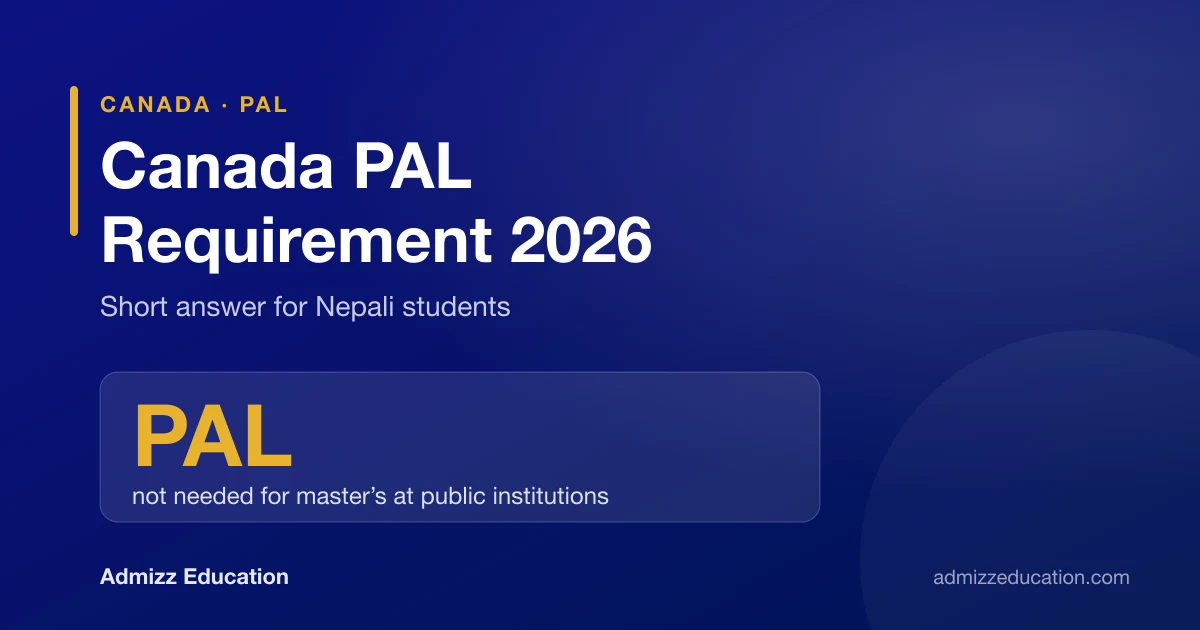
Most new applicants need a provincial attestation letter (PAL). From 1 January 2026, master's and doctoral students at public designated learning institutions are exempt, as are school students, certain priority groups and students extending at the same institution and level. Nepali bachelor's and college applicants will usually need one.
The details
- Exempt from 1 January 2026: master's and doctoral students at public institutions; school students; certain Government of Canada priority groups; existing study permit holders extending at the same institution and level.
- Usually need a PAL: new bachelor's and college applicants.
- 2026 cap: 309,670 study permit applications.
See the full Canada study permit cap guide.
Sources
Checked in October 2026. Rules change, so confirm on the official site when you apply. For help with your own application, talk to our counselling team.
Frequently Asked Questions
What is the 2026 Canada study permit cap?
IRCC set a cap of 309,670 study permit applications for 2026 and expects to issue up to 408,000 permits.
Is a master's easier than a bachelor's for Canada?
In terms of the PAL requirement, yes, because master's and doctoral students at public institutions do not need a PAL.
Talk to Counselor Today