Application cap (2026)
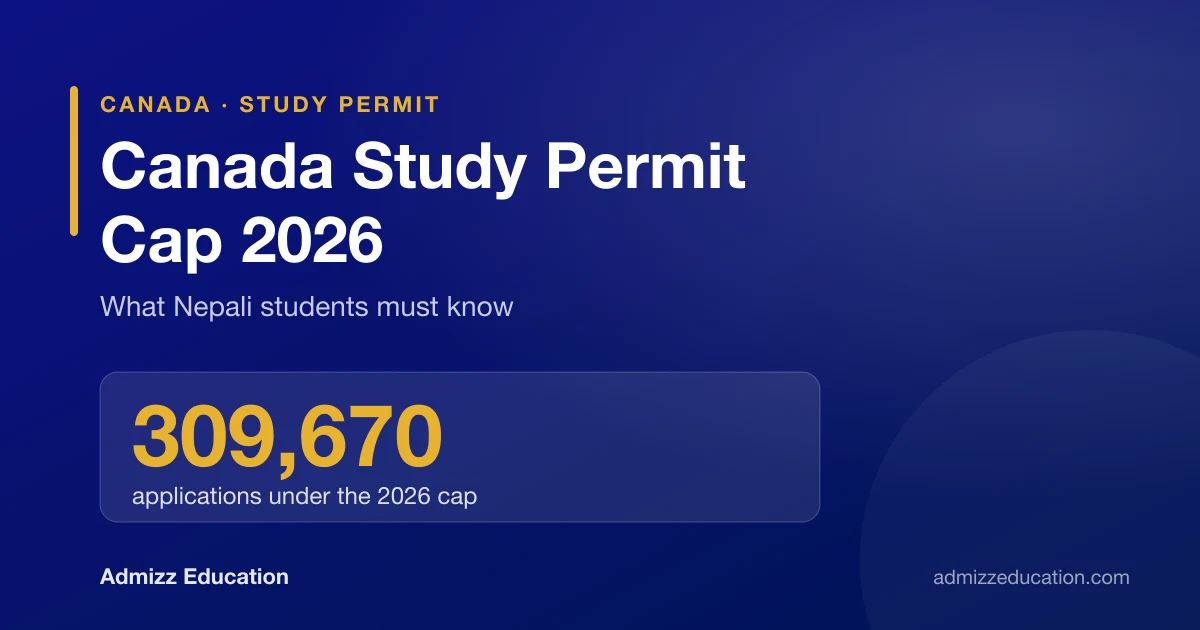
309,670
Permits IRCC expects to issue
Up to 408,000
New students / extensions
155,000 / 253,000
PAL exemption for master's and PhD
Yes, at public institutions
Quick Answer
For 2026, Canada has set a cap of 309,670 study permit applications and expects to issue up to 408,000 permits, of which 155,000 are for new students and 253,000 are extensions. Most new bachelor's and college applicants need a provincial attestation letter (PAL) before they apply. Master's and doctoral students at public universities and colleges are exempt, which makes postgraduate study the easier route for Nepali applicants.
What Canada announced for 2026
Immigration, Refugees and Citizenship Canada (IRCC) has capped the number of study permit applications it will accept in 2026 at 309,670. It expects to issue up to 408,000 study permits during the year. That number is made up of 155,000 permits for new international students and 253,000 extensions for students who are already in Canada.
This is a lower target than the previous two years. IRCC's 2025 issuance target was 437,000 and its 2024 target was 485,000, according to CIC News. The practical effect is that fewer new students are admitted, so a complete and well-prepared application matters more than it used to.
Who needs a provincial attestation letter (PAL)
A provincial attestation letter is a document from the province or territory that shows your application fits within its share of the cap. Most new applicants need one before they submit a study permit application.
From 1 January 2026, IRCC says the following groups do not need a PAL or territorial attestation letter:
- master's and doctoral degree students at public designated learning institutions (DLIs)
- primary and secondary school students
- certain Government of Canada priority groups and vulnerable cohorts
- existing study permit holders who extend at the same institution and at the same level of study
This means a Nepali student applying for a bachelor's degree or a college diploma will usually need a PAL, while a student applying for a master's at a public university will not.
How the cap is shared between provinces
The cap is divided between provinces and territories, so the number of PAL spaces depends on where you plan to study. IRCC's 2026 allocations for the four largest provinces are:
- Ontario: 104,780
- Quebec: 93,069
- British Columbia: 32,596
- Alberta: 32,271
Because each province controls its own spaces, the same course at two different institutions can have a very different chance of getting a PAL. Ask the institution how it handles PAL requests before you pay a deposit.
What this means for Nepali students
Nothing in the 2026 rules is specific to Nepal, but they change how a Nepali applicant should plan:
- Check whether your programme needs a PAL. Postgraduate study at a public institution does not, which removes a major step and a source of delay.
- Apply early. With fewer new permits available, late applications carry more risk.
- Choose public institutions with care. The exemption applies to public DLIs, so confirm the institution's status before you rely on it.
- Keep your finances and documents ready. The cap does not change financial or document requirements, so a strong file still decides the outcome.
If you are comparing countries, our guides to studying in Canada from Nepal and the Canada student visa explain the wider process.
What could change next
Canada reviews its cap every year, and the 2026 cap is lower than the last two. Treat the numbers above as the 2026 position, not a permanent rule. Check IRCC's official notice before you apply, and plan for the possibility that 2027 allocations differ.
Sources
- IRCC: 2026 provincial and territorial allocations under the international student cap
- CIC News: Canada announces 2026 study permit cap
Figures checked against the IRCC notice in October 2026. Always confirm current rules on the official IRCC website before you apply.
Frequently Asked Questions
How many study permits will Canada issue in 2026?
IRCC expects to issue up to 408,000 study permits in 2026: 155,000 for new international students and 253,000 extensions for students already in Canada. The application cap is 309,670.
Do I need a PAL to study in Canada in 2026?
Most new applicants do. Master's and doctoral students at public institutions, school students, certain priority groups and students extending at the same institution and level are exempt from 1 January 2026.
Is a master's easier than a bachelor's for Canada from Nepal?
In terms of the PAL requirement, yes. Master's and PhD students at public designated learning institutions do not need a PAL, while most bachelor's and college applicants do.
Which provinces have the most study permit spaces in 2026?
Ontario has 104,780, Quebec 93,069, British Columbia 32,596 and Alberta 32,271, according to IRCC's 2026 allocations.
Talk to Counselor Today