Quick Answer
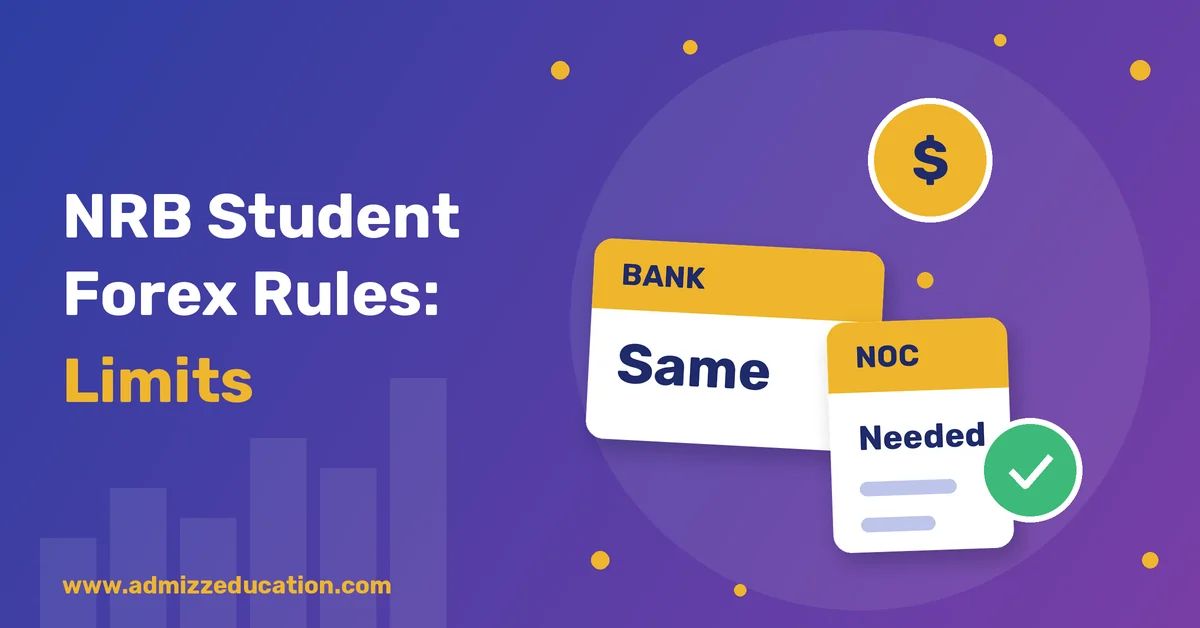
Nepal Rastra Bank's Unified Circular-2082 lets banks provide foreign currency for tuition and living costs when you hold a MoEST No Objection Letter (NOC) and an offer or admission document. From the second exchange onward, the same bank that gave the first exchange must handle it. A June 2026 circular lets banks add up to 5% only in one case: when an embassy requires proof of funds in a local currency that is not on NRB's convertible list.
What do Nepali students need to send money abroad?
The rules sit in NRB's Unified Circular-2082, circular 8/2082, "Foreign currency exchange for higher education study." The circulars are listed on the NRB foreign exchange circulars page. They are scanned Nepali documents, and every quote on this page is our translation. Check the original circular with your bank.
For study in countries other than India, the circular asks for:
- An application and a copy of your passport.
- The Ministry of Education's No Objection Letter (NOC), stamped "Bank copy for first-time exchange" and addressed to Any Bank.
- A letter from the institution that states the visa conditions.
- Supporting documents such as the institution's letter, brochures, an invoice and the I-20 form.
- A signed undertaking to return the money if the visa is refused.
The institution's name, address, subject and level must match your NOC. Tuition is paid only through banking channels, to the institution abroad. If you do not have your NOC yet, read our guide on how to get your NOC.
Must you use the same bank for later payments?
Yes, from the second exchange onward. Clause 1(च) of the circular says tuition and living-cost exchange is given only on the basis of a record of the certified copy of the NOC held at the bank that provided the first exchange, and from that same bank. The aim stated is to prevent double payment.
Choose your first bank with this in mind. Pick one that handles student remittances to your destination country.
How much can you send for living costs?
The circular does not set an overall annual cap on tuition. It does limit living costs in two situations:
- Tuition only partly paid: living costs are at most 50% of the annual cost, for up to 6 months at a time.
- Documents do not state a living-cost figure: the circular sets yearly maximums, listed below.
| Destination | Yearly maximum |
|---|---|
| Canada, USA, Australia and Europe | USD 8,000 |
| Singapore and South Korea | USD 6,000 |
| China, Malaysia, Thailand and the Philippines | USD 4,000 |
| Bangladesh and Pakistan | USD 2,500 |
| Other countries | USD 5,000 |
If your offer or visa documents state a living-cost figure, ask your bank how it applies the circular to your case.
What is the 5% buffer announced in June 2026?
News reports in June 2026 described a general 5% extra allowance for students. The circular is narrower. NRB circular 12/2082-83, dated 2083/02/26 BS (about June 9, 2026), amends the Unified Circular by adding clause 1(ङ)(ओ). It applies where an embassy or government agency requires a fixed amount to be shown in the student's name in a local currency that is not on NRB's list of convertible foreign currencies, for the visa or its renewal and for living costs. If the extra amount needed because of exchange-rate movement cannot be determined, US dollars or another convertible currency up to a maximum of 5 percent additional may be sent.
In other words, it is not a general 5% extra for every student. The same circular says banks must accept documents certified by digital signature under the Electronic Transactions Act, 2063.
What about studying in India?
India is handled separately. Section 2 of the circular, "For study in India," allows convertible currency only for international-quota seats, and living costs are paid in Indian rupees only. The 5% buffer sits in the section for countries other than India, so it does not apply to India.
What should Nepali students do now?
- Get your NOC first. The bank cannot start without the bank copy.
- Match your documents. The institution name, address, subject and level on your offer must match the NOC.
- Pick your bank carefully. Later payments must go through the same bank.
- Ask your bank which rule applies. The yearly living-cost limits apply only when your documents do not state a figure.
- Plan your proof of funds. See our guide on proof of funds for study abroad from Nepal.
For a country-by-country plan, see Study Abroad From Nepal. If you want a counselor to check your documents before you visit the bank, book a free consultation.
Frequently Asked Questions
Do I need an NOC to send tuition abroad from Nepal?
Yes. The circular asks for the Ministry of Education's No Objection Letter, stamped as the bank copy for first-time exchange, along with your offer or admission documents.
Can I pay later installments through another bank?
No. From the second exchange onward, the circular says the exchange is given from the same bank that provided the first exchange.
Is there a 5% extra allowance for all students?
No. The June 2026 circular allows up to 5 percent additional only when an embassy requires proof of funds in a local currency that is not on NRB's convertible list.
How is study in India different?
For India, the circular allows convertible currency only for international-quota seats, and living costs are paid in Indian rupees only.
What is the yearly living-cost limit for the USA, Canada and Australia?
If your documents do not state a living-cost figure, the circular sets USD 8,000 a year for Canada, the USA, Australia and Europe.
The circulars are scanned Nepali documents, and the quotes and figures above are our translation of Unified Circular-2082 (circular 8/2082) and circular 12/2082-83. We found no newer circular that changes the student provisions, but check the NRB site and your bank before you send money. This guide was checked in November 2026.
Sources
The facts in this guide come from the official pages below. Open them to confirm the latest details before you apply.
- nrb.org.npNepal Rastra Bank: Foreign exchange circulars (Foreign Exchange Management Department)
- nrb.org.npNepal Rastra Bank: Circular 12/2082-83 amending the Unified Circular
📅 Checked in November 2026. Rules change, so confirm on the official site before you apply.
Book a Free Consultation