Rule published
29 December 2025
First used for
FY2027 registration (March 2026)
Level 4 / 3 / 2 / 1 entries
4 / 3 / 2 / 1
Employer must state
Occupation code, wage level, work area
Quick Answer
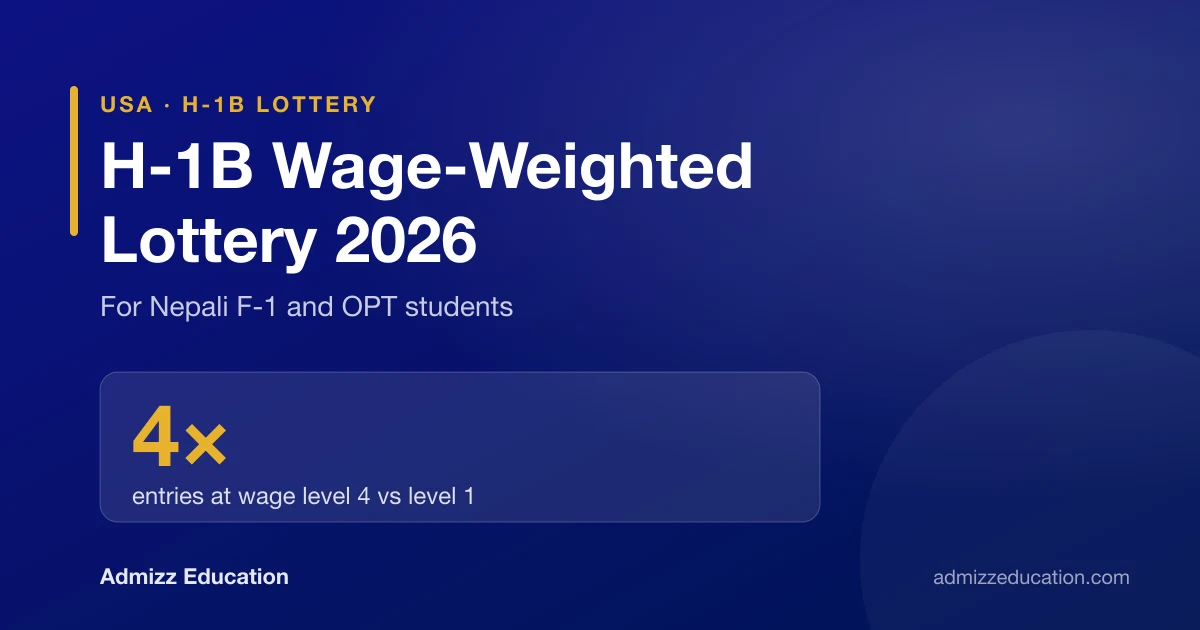
DHS published a final rule on 29 December 2025 that replaces the random H-1B cap lottery with a wage-weighted selection. A job at wage level 4 enters the lottery four times, level 3 three times, level 2 twice and level 1 once. It first applied to the FY2027 registration in March 2026. For Nepali students moving from F-1 and OPT to H-1B, the wage level of the job offer now matters as much as the employer's willingness to sponsor.
What changed in the H-1B lottery
Until now, the H-1B cap lottery picked registrations at random. Under a final rule published by the Department of Homeland Security on 29 December 2025, selection is weighted by wage level. The rule first applied to the FY2027 cap season, whose registration took place in March 2026, according to Fragomen.
Employers now state the occupational code, the wage level (from the Department of Labor's OEWS data) and the area of employment for every candidate they register.
How the wage levels translate into chances
The number of times a registration enters the selection pool depends on the wage level of the offered job:
- Level 4 (highest wage): entered four times
- Level 3: entered three times
- Level 2: entered two times
- Level 1 (entry level): entered once
A level 4 registration therefore has four times the chances of a level 1 registration in the same lottery. Entry-level offers, which many new graduates receive, are the most affected.
What this means for Nepali students on F-1 and OPT
Most Nepali students reach H-1B through F-1 study, then OPT or STEM OPT, then an employer petition. The new rule changes the planning in three ways:
- The job offer's wage level matters. Two graduates with the same degree can have very different chances if one is offered a level 1 role and the other a level 3 role.
- Employer conversations start earlier. Ask recruiters which wage level they expect to register, and whether the role could be classified higher.
- Have a back-up route. A lottery of any kind is uncertain, so keep an alternative, such as another country or another visa category, in your plan.
The US also changed how long students may stay. Read how the end of duration of status and the 15 September 2026 deadline affect your timeline.
A separate $100,000 payment
Fragomen's summary notes that a separate $100,000 payment, imposed by presidential proclamation on H-1B petitions, is distinct from the cap registration process. Who it covers and how it applies can change, so ask your employer's immigration counsel and check current USCIS guidance rather than relying on a general article.
How to plan if you are choosing a country now
If you are deciding where to study, treat post-study work as a rule that can change. Compare the US with other destinations on cost, work rights and risk. Our guide to F-1 versus UK student visas and the study abroad rule changes calendar set out the main differences.
Sources
Checked in October 2026. Immigration rules change often. Confirm the current position with USCIS or a qualified immigration lawyer before you decide.
Frequently Asked Questions
How does the H-1B wage-weighted lottery work?
Registrations enter the selection pool by wage level: level 4 four times, level 3 three times, level 2 twice and level 1 once. Higher-paid jobs therefore have better odds.
When did the H-1B weighted selection rule start?
DHS published the final rule on 29 December 2025, and it first applied to the FY2027 cap registration held in March 2026.
Are entry-level graduates affected by the new H-1B rule?
Yes. Entry-level roles are usually wage level 1, which enters the lottery once, compared with four times for level 4.
What should Nepali students on OPT do about the H-1B lottery?
Ask employers which wage level they will register, start the job search early, and keep a back-up plan, such as another visa route or country.
Talk to Counselor Today